Types of Electric Smokers Explained
The main types of electric smokers are vertical cabinet models, pellet grills, kamado-style cookers and small tabletop units. For most home cooks, a vertical cabinet smoker is the simplest and most forgiving choice because it runs on a heating element and wood chips with set-and-forget controls.
On this page (10 sections)
- What are the types of electric smokers?
- Why vertical cabinet smokers suit most home cooks
- When a pellet grill is the better electric smoker
- Where kamado-style electric cookers fit in
- Are tabletop electric smokers worth it?
- How to choose between the types of electric smokers
- Which electric smoker would we pick?
- What else changes between electric smoker types?
- Common mistakes when picking between smoker types
- The bottom line on types of electric smokers
The main types of electric smokers are vertical cabinet models, pellet grills, kamado-style cookers and tabletop units. For most home cooks, a vertical cabinet smoker is the easiest place to start, because a heating element and wood chips do the work while you set a temperature and walk away.
Electric smokers differ mostly in how they make smoke and how much food they hold. A cabinet unit warms a chip tray with an element.
A pellet grill burns pellets in a fire pot. A kamado-style cooker keeps heat inside thick ceramic walls.
A tabletop unit shrinks the cabinet idea down to a small footprint.
This guide explains each type in plain terms and who it suits. For a side-by-side look at how electric compares with other fuels, start with our BBQ smoker comparison.
What are the types of electric smokers?
Electric smokers fall into four main designs: vertical cabinet, pellet, kamado-style and tabletop. They all plug in, but they differ in fuel, cooking area and how much attention they need.
"Electric" only means the smoker needs an outlet. The smoke can come from chips, pellets or charcoal, and that shapes flavor, cook time and cleanup.
A vertical cabinet uses a heating element to warm a tray of wood chips inside an insulated box. A pellet grill runs an auger and fan to feed a fire pot, so it cooks more like a grill and gets hotter.
A kamado-style cooker pairs thick ceramic walls with an electric starter or controller. A tabletop smoker is a small cabinet that uses the same element-and-chips method but holds less food.
How the four types differ in fuel and control
Fuel is the clearest dividing line. Vertical cabinets and tabletop units burn wood chips.
Pellet grills burn wood pellets. Kamado-style cookers use charcoal or wood chunks, with electricity for lighting or temperature control.
Control is the second difference. Digital panels on cabinet smokers let you set a temperature and a timer.
Pellet grills often have a controller that manages the auger speed to hit a set point. Kamado cookers rely more on vent settings, with an electric controller adding help.
Pick a chip-burning cabinet if you want the least fuss. Pick a pellet grill if you want smoke and high-heat grilling from one machine.
Pick a kamado if ceramic heat retention and charcoal flavor matter more than plug-and-play simplicity.
Each type has a place, and none is wrong. The right answer depends on what you cook and how much babysitting you want to do.
Why vertical cabinet smokers suit most home cooks
A vertical cabinet smoker is the simplest electric smoker to run and the easiest to live with for most buyers. You plug it in, set the temperature and timer, load chips and let the element work.
Racks sit above the heat source, so heat and smoke rise through the food and drippings fall away from the element. That layout lets you stack several racks without rotating trays.
Many cabinets reach about 275°F, which covers ribs, brisket, pork butt and whole birds. They are not high-heat grills, so don't expect a 500°F steak sear.
A side chip loader lets you add chips without opening the main door. On the EAST OAK 30 Electric Smoker with Side Chip Loader, one fill keeps smoke going for 2 to 3 hours.
Choose a cabinet for predictable, hands-off cooks. If you also want high-heat grilling, a pellet grill covers more ground.
What to check on a cabinet smoker before buying
Check the cooking area first. The EAST OAK 30 Electric Smoker with Side Chip Loader lists 725 sq in across four chrome-coated racks, enough for up to 6 whole chickens or 2 large turkeys.
Next, check the element wattage. An 800W element in a double-wall cabinet with foam insulation holds temperature better in the cold than a weaker element in a single wall.
Then look at the controls and footprint. A 12-hour digital timer and a built-in meat probe let you walk away and check doneness without opening the door, and rear wheels help with a heavy, tall unit.
Write down your cooking area, element wattage and control type before you compare models.
When a pellet grill is the better electric smoker
A pellet grill is the type to choose if you want smoke and high-heat grilling from one machine. Electricity runs the auger and fan, but wood pellets provide the heat and flavor.
A controller manages the feed rate from the hopper to the fire pot to hold temperature. It gets hotter than a chip smoker, so you can smoke low and then grill hot on the same unit.
You can swap hickory for apple or a competition blend to change the flavor. The trade-off is that pellets cost more per cook than chips and need dry storage.
Cleanup is heavier too, with ash in the fire pot and upkeep for the auger and hopper.
Pick a pellet grill if versatility matters more than simplicity. Pick a cabinet if you mainly smoke low and slow and want the least maintenance.
Our charcoal vs electric smoker comparison covers how pellet and charcoal differ in flavor and effort.
Who should skip a pellet grill
Skip a pellet grill if you only smoke ribs and birds at low heat. The extra cost and cleanup buy you grilling range you may never use.
Skip it if you want the lowest possible learning curve. A pellet grill has more parts that can jam or need cleaning than a simple chip cabinet.
Skip it if you don't have dry storage for pellets. Damp pellets feed poorly and can jam the auger.
A cabinet smoker wins for pure smoking. A pellet grill wins for cooks who want one machine for smoke and sear.
Match the type to how you actually cook.
Where kamado-style electric cookers fit in
A kamado-style cooker is the type for buyers who want ceramic heat retention with electric help. Thick ceramic walls hold heat for hours, and an electric starter or controller takes the guesswork out of lighting and holding temperature.
That suits long cooks and cool weather. You still load charcoal or wood chunks, which give a deeper smoke than chips, and the ceramic lets the cooker get hot enough to sear.
The trade-offs are weight, cost and effort. These cookers are heavy, need a stable spot, heat and cool slowly, and still leave you managing fuel and ash.
Choose one if charcoal flavor and heat retention matter most. Skip it if you want to plug in and forget it.
For a look at how electric compares with gas and charcoal, see our propane vs electric smoker guide.
Are tabletop electric smokers worth it?
A tabletop electric smoker is worth it for small households, balconies and first-time smokers who want real smoke flavor without a full-size cabinet. It uses the same element-and-chips method in a smaller body.
These units sit on a counter, a stand or a small patio table. They hold fewer racks, so they suit a couple or a single batch of ribs or a chicken.
The trade-off is capacity. A tabletop model cannot hold two turkeys or eight racks of ribs, and it needs a level, heat-safe surface with clearance from walls.
Buy a tabletop if you cook small batches and lack space. Buy a 30-inch cabinet if you host gatherings.
For larger cooks, the EAST OAK 30 Electric Smoker offers 725 sq in across four racks, a built-in meat probe, a viewing window and keep-warm mode when the cook ends.
Matching tabletop size to your cooks
Match the rack count to what you cook most. Two racks suit a chicken or a rack of ribs.
Four racks handle a small gathering.
Check the footprint against your space. A tabletop unit needs room for the door to open and for you to reach the chip loader.
Keep the cord off the ground and away from drips.
Small cooks call for small smokers. A tabletop unit that fits your balcony beats a full cabinet that never leaves the garage.
If you plan a holiday bird, our guide to the best electric smoker for a turkey shows which sizes fit a whole bird.
How to choose between the types of electric smokers
Choose the type by how you cook, how much food you smoke at once and how much tending you want. Fuel and size follow from those answers.
Start with the cook. If you mainly smoke ribs, brisket, pork butt and poultry at low heat, a vertical cabinet fits.
Choose a pellet grill if you want high-heat grilling too, and a kamado if charcoal flavor is the priority.
Then count the crowd. A 30-inch cabinet with four racks suits family gatherings, a tabletop suits small batches, and pellet grill cooking areas vary, so check one against your largest cook.
Finally, think about effort. A digital cabinet with a timer and meat probe is the least demanding, a pellet grill needs more cleaning, and a kamado needs fuel and vent management.
Match the type to your normal cook, not your occasional one.
A quick decision guide for the four types
- Vertical cabinet: best for low-and-slow smoking with set-and-forget controls and the least fuss.
- Pellet grill: best for smoke plus high-heat grilling from one machine, with more cleaning.
- Kamado-style: best for charcoal flavor and ceramic heat retention, with more weight and effort.
- Tabletop: best for small batches and tight spaces, with limited capacity.
Start with a vertical cabinet unless a specific need pulls you elsewhere. It is the type most buyers will use most often and the easiest to learn on.
Which electric smoker would we pick?
We would pick the EAST OAK 30 Electric Smoker for most buyers, because it combines a large cooking area, a meat probe and keep-warm mode at a size that still fits a patio. It is a vertical cabinet, the type that suits the widest range of home cooks.
Its 725 sq in across four racks fits full racks of ribs, multiple birds or several cuts at once. The built-in meat probe tracks internal temperature in real time, so you know when the meat is ready without opening the door.
When the target time is reached, it stops automatically and switches to keep-warm mode.
The side chip loader lets you add chips without opening the main door, so heat and smoke stay inside. A clear viewing window lets you check progress without letting heat out.
The runner-up for chip capacity and cold-weather cooks
The EAST OAK 30 Electric Smoker with Side Chip Loader is a strong second pick, and the better choice if you smoke in cold weather or want longer runs between refills. Its double-layer steel and internal foam insulation hold heat better than a thin single wall.
Its 800W element maintains steady temperatures in cold weather. The side chip loader keeps smoke going for 2 to 3 hours on a single fill, so you open the door less and lose less heat.
Four chrome-coated racks give 725 sq in, enough for up to 6 whole chickens or 2 large turkeys.
A digital panel with temperature tracking up to 275°F and a 12-hour timer handles long cooks. Rear wheels and a rear handle make it easy to roll across a patio.
It lacks the meat probe and viewing window of the top pick, but it wins on insulation.
The budget-friendly digital cabinet
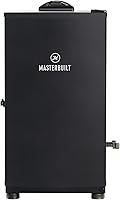
The Masterbuilt 30 Digital Electric Smoker is the value pick for a first cabinet. It sets temperature and time on a digital panel up to 275°F and uses a patented side wood chip loader to add smoke without opening the door.
Its removable water bowl adds moisture for juicier meat. Four chrome-coated racks give 711 sq in, enough for up to 6 chickens, 2 turkeys or 4 racks of ribs.
A removable rear grease tray makes cleanup easier.
It is a lighter unit than the EAST OAK models, which helps if you move it often. It lacks a meat probe and window, so you rely on the timer and a separate thermometer.
For a simple, proven cabinet at a lower price tier, it is a solid entry point.
What else changes between electric smoker types?
Beyond fuel and size, the details that change between types are controls, insulation, cleanup and power needs. These affect daily use more than the marketing labels.
Controls range from a simple dial to a digital panel with a timer and meat probe. A probe helps more than a timer alone on thick cuts, and keep-warm mode suits long cooks.
Insulation decides how well a smoker holds heat in wind and cold. Double-wall steel with foam recovers faster than a single wall.
Cleanup follows the fuel. Chip cabinets leave ash and grease, pellet grills add fire-pot ash and auger upkeep, and kamados need ash removal and vent care.
Every electric type needs a safe outlet and a dry cord route. A dedicated outdoor outlet beats a long run from indoors.
A smoker that is easy to run and clean gets used more than one with features you never touch.
Features worth paying for on a cabinet smoker
A side chip loader is worth it because it keeps heat in. A digital timer is worth it for long cooks.
A meat probe is worth it for thick cuts and whole birds.
A viewing window is a nice extra, not a must. A water bowl adds moisture for some cooks.
Wheels matter if you store the smoker away from its cooking spot.
Prioritize the loader, the timer and the probe. Those three features do the most to make a cabinet smoker easy to live with.
Common mistakes when picking between smoker types
The most common mistake is buying for an occasional cook instead of your normal one. A pellet grill bought for one brisket and a few burgers can become a cleaning chore you avoid.
Another is ignoring the power route. A smoker needs a safe outlet near the cooking spot, and a long, loose cord across a wet patio is a hazard.
A third is underestimating cleanup. Pellet grills and kamados need more upkeep than a chip cabinet, so if you won't clean ash and grease regularly, pick the simpler type.
A fourth is skimping on capacity. A tabletop unit that fits a chicken will not fit a holiday turkey, so match the cooking area to your largest planned cook.
Buy the type that fits your normal week, then size it for your biggest cook. That keeps you from overbuying features or underbuying space.
The bottom line on types of electric smokers
The types of electric smokers come down to vertical cabinets, pellet grills, kamado-style cookers and tabletop units. For most home cooks, a vertical cabinet fits best because it is simple to run, forgiving on long cooks and easy to clean.
Pick a pellet grill for smoke plus high-heat grilling, a kamado for charcoal flavor, or a tabletop for small batches and tight spaces.
Among cabinets, we would buy the EAST OAK 30 Electric Smoker for its meat probe, glass door and keep-warm mode. The EAST OAK 30 Electric Smoker with Side Chip Loader is the better cold-weather choice, and the Masterbuilt 30 Digital Electric Smoker is the value pick for a first cabinet.
Start with the type that matches your normal cook, then size it for your biggest gathering. For more, read our BBQ smoker comparison and our charcoal vs electric smoker guide.
Frequently asked questions
Do all types of electric smokers use wood chips?
No. Vertical cabinet smokers use wood chips in a tray or box, while pellet grills use small wood pellets fed from a hopper.
Kamado-style electric cookers use lump charcoal or wood chunks with an electric starter, so check the fuel each design calls for.
How much space does an electric smoker need?
A 30-inch vertical cabinet smoker needs a patio spot with room to open the door and reach the side chip loader. Measure the footprint plus clearance on all sides, and check that the spot is level before you load it with food.
Can you use an electric smoker in cold weather?
Yes, but insulation matters. A double-wall cabinet with internal foam holds heat better than a thin single-wall unit, so it recovers faster when the outside air is cold.
Place the smoker out of the wind and give the cord a dry route to the outlet.
Is an electric smoker the same as a pellet grill?
No. An electric smoker uses a heating element to warm wood chips for smoke, while a pellet grill feeds wood pellets into a fire pot to create both heat and smoke.
Both plug in, but they cook and taste differently.