How to Use a Pit Boss Electric Smoker
To use a Pit Boss electric smoker, season it empty first, then set the dial to your target temperature, add soaked wood chips to the tray, and fill the water bowl before loading meat. Keep the door shut through the cook and check internal temperature before you pull the food.
On this page (8 sections)
- How do you set up a Pit Boss electric smoker before the first cook?
- What do you need to load before you turn the smoker on?
- How do you set the temperature and keep smoke going?
- Why does the water bowl matter during a smoke?
- How do you place meat and manage the cook?
- How do you know when the meat is done?
- How do you shut down and clean a Pit Boss electric smoker?
- Which smoker suits a first electric setup?
To use a Pit Boss electric smoker, season it empty first, then set the dial to your target temperature, add soaked wood chips to the tray, and fill the water bowl before loading meat. Keep the door shut through the cook and check internal temperature before you pull the food.
An electric smoker takes the fire management out of barbecue, but the setup and the small habits around it decide whether the meat comes out tender or dry. The steps below cover a vertical electric cabinet, which is the shape most Pit Boss electric models use.
How do you set up a Pit Boss electric smoker before the first cook?
Season the smoker before any food goes in. Run it empty at about 250°F for two to three hours with a handful of wood chips, so the factory oils burn off and the interior builds a light coating.
The manual that ships with your smoker gives the exact time, and that instruction wins over any general guide.
Place the unit on a level, heat-safe surface outdoors. Give it clearance from siding, fences and patio covers, and keep the cord away from walkways.
Plug it into a grounded outlet that nothing else heavy shares.
Check that the water bowl, chip tray, racks and rear grease tray all sit in their slots. A tray knocked loose during shipping is the usual reason a first cook runs wrong.
What do you need to load before you turn the smoker on?
Fill the water bowl and load the chip tray before you set the temperature. That way the cabinet heats once, without a door opening partway through the warm-up.
Have a drip pan ready for fatty cuts.
Water in the bowl adds moisture and helps steady the cabinet temperature. Refill it when it runs low, using warm water so the heat doesn't drop.
Wood chips go in the removable tray, spread in a loose layer rather than packed down. Soaking for about 30 minutes slows the burn; dry chips light faster.
The best wood depends on the meat, with hickory and mesquite for beef and pork and apple or cherry for poultry.
Racks take meat in a single layer with gaps for air. A probe thermometer in a clip belongs in thick cuts before the cook starts, not after.
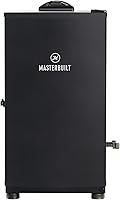
The Masterbuilt 30 runs on an analog dial up to 275°F and gives 535 square inches of cooking space, enough for 3 chickens or 3 racks of ribs. Its three chrome racks, water bowl and chip tray match the order above, and the rear grease tray lifts out for cleanup.
How do you set the temperature and keep smoke going?
Set the dial or digital panel to your recipe's temperature and let the cabinet settle for 20 to 40 minutes. Open the door as little as possible after that.
Every peek costs heat and stretches the cook.
A stable 225°F to 250°F suits pork shoulder, brisket and ribs. Poultry often runs hotter at 275°F for crisper skin.
An analog dial holds its setting but shows the temperature only on a separate gauge, so give it time before trusting the reading.
Wood chips burn down and stop smoking long before the meat is done. Add a fresh handful when the smoke thins, and don't stack chips so deep that airflow stalls.
Thin blue smoke is the goal; thick white smoke means the tray is overloaded or running too cool.
Why does the water bowl matter during a smoke?
The water bowl keeps the cabinet humid and helps hold temperature steady. It doesn't add flavor, so plain water is fine.
Some cooks swap in cider, beer or stock, but the effect on taste is small.
A full bowl slows the drying that turns a long brisket or pork butt tough. Refill it when the level drops, using warm water from a jug so you lose less heat.
Don't let the bowl boil dry. An empty bowl on a long cook leaves the meat exposed to dry air and can warp the tray.
Top it up at the same time you reload chips, which limits how often the door opens.
How do you place meat and manage the cook?
Put meat on the racks with space around each piece, then close the door and leave it alone. Fat side up on brisket and pork lets drippings baste the meat.
A drip pan underneath catches the rest.
Keep the top rack for smaller items and the lower racks for big cuts. Don't stack pieces or push them against the cabinet walls.
Rotate racks once about halfway through only if a piece is browning unevenly.
Add chips and water when the smoke fades or the bowl empties. Beyond that, let the smoker work.
Opening the door to baste every hour cools the cabinet and slows the cook, and it rarely improves the result.
How do you know when the meat is done?
Cook to internal temperature, not to time. Poultry needs 165°F in the thickest part, while pork shoulder and brisket turn tender around 195°F to 205°F.
Ribs are done when the meat pulls back from the bone.
A probe thermometer takes the guesswork out. Clip it in before the cook, route the wire through the vent, and read it without opening the door.
For poultry, check the thigh and the breast separately.
Rest the meat before slicing. Wrap brisket and pork in foil or butcher paper and let them sit for 30 to 60 minutes; the carryover heat finishes the job.
Skip the rest and the juices run out on the board.
The Banbitebq 4-pack fits the Masterbuilt 710 digital smoker and its part number 551315, and it's not built for the Gravity Series, AutoIgnite 545, Pit Boss or Traeger grills. Each probe has colored silicone on the end so you can tell the pieces apart, and the set includes clips and grommets.
How do you shut down and clean a Pit Boss electric smoker?
Turn the smoker off and unplug it, then let it cool fully before you touch anything. Hot ash and grease are the main risks at this stage.
Empty the chip tray once the ash is cold.
Wipe the racks and water bowl with warm, soapy water and dry them. Scrape loose grease into the rear grease tray, then wash that tray separately.
A mild cleaner on the interior is enough; skip abrasive pads on coated surfaces.
Re-oil the racks lightly after drying to slow rust. Cover the smoker or store it out of the rain between cooks.
A clean cabinet smokes better next time, because old grease and ash change how the chip tray burns.
Which smoker suits a first electric setup?
A vertical electric cabinet with an analog dial is the simplest place to start, because there's no fire to manage and the load order above stays the same from cook to cook. Compare cabinet shapes in our guide to Pit Boss vertical smokers before you commit to one.
The Masterbuilt 30 is the pick for a first smoker on a budget: analog control, 535 square inches of space, three chrome racks and a water bowl. Its dial tops out at 275°F, which covers low-and-slow pork, ribs and poultry but leaves no headroom for hotter cooks.
If you want more control and a bigger cabinet, the EAST OAK 30 is the step up. It has 725 square inches of cooking area, digital controls, a built-in meat probe and a side chip loader so you can add wood without opening the door.
It also switches to keep-warm mode when your set time is reached.
Both are electric, so both follow the same seasoning, loading and shutdown routine. For the wider picture on fuel types, read our comparison of charcoal vs electric smokers, and browse electric smokers for home use when you're ready to size the cabinet to your patio.
Once the smoker is running, the routine is simple: season it, set the temperature, keep the water bowl and chip tray topped up, and trust the thermometer over the clock. That habit is the whole answer to how to use a Pit Boss electric smoker well, and it carries over to any vertical electric cabinet.
Frequently asked questions
Do I need to soak wood chips before using an electric smoker?
Soaking is optional. Many cooks soak chips for about 30 minutes to slow the burn and stretch the smoke, while dry chips light faster and give a cleaner flavor.
Either way, keep the tray topped up and don't pack the chips tight, since airflow matters more than moisture.
What temperature should I set an electric smoker to?
Most meats smoke between 225°F and 250°F. Poultry often runs hotter at 275°F for crisp skin, and fish or cheese sits lower.
Set the dial to your recipe's target, give the cabinet 20 to 30 minutes to settle, and check the reading before adding meat.
How long does an electric smoker take to heat up?
Expect 20 to 40 minutes to reach a stable temperature, depending on the outside weather and how full the cabinet is. Cold, windy days slow it down.
Fill the water bowl and chip tray first so the heat you build isn't lost to an open door.
Can I leave a Pit Boss electric smoker unattended?
No. Electric smokers are easier to run than charcoal, but they still use real heat and wood, so someone should stay within reach.
Keep the smoker on a level, non-flammable surface, away from walls and overhangs, and never leave children or pets alone near it.
How do I clean an electric smoker after a cook?
Let it cool completely, empty the chip tray and water bowl, and wipe the racks and interior with a mild cleaner. Scrape loose grease into the rear grease tray, then wash the removable parts.
A light coat of cooking oil on the racks after drying helps stop rust.